

News
Featured
Contact Us
Contact: POWER DUKE
Phone: +86 18059884790
E-mail: plc66@qq.com
Add: fujian xiamen
- Warehouse: Spot
- Warranty: 365 days
- Quality: Original module
- Condition: New
- Shipping method: Courier delivery
- Contact person: LI MING
- Contact number: +86 18059884790
- WeChat:18059884790
- E-mail: plc66@qq.com
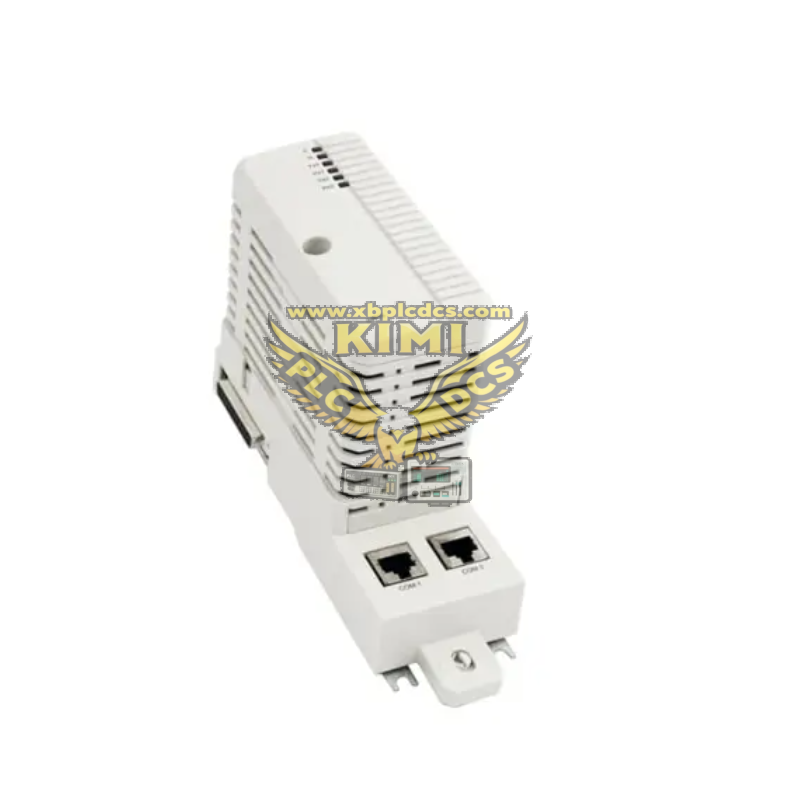
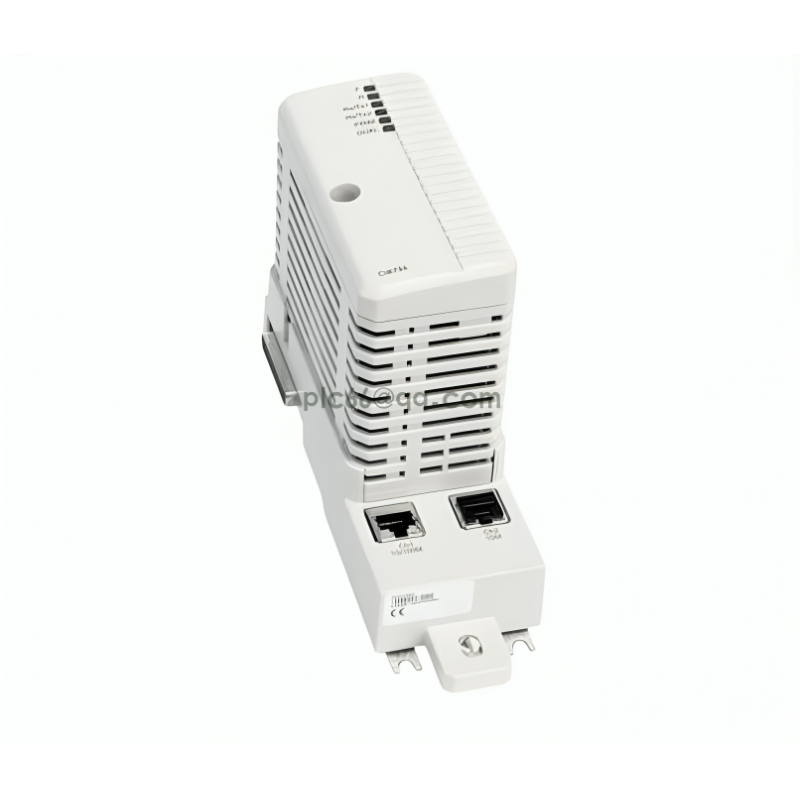
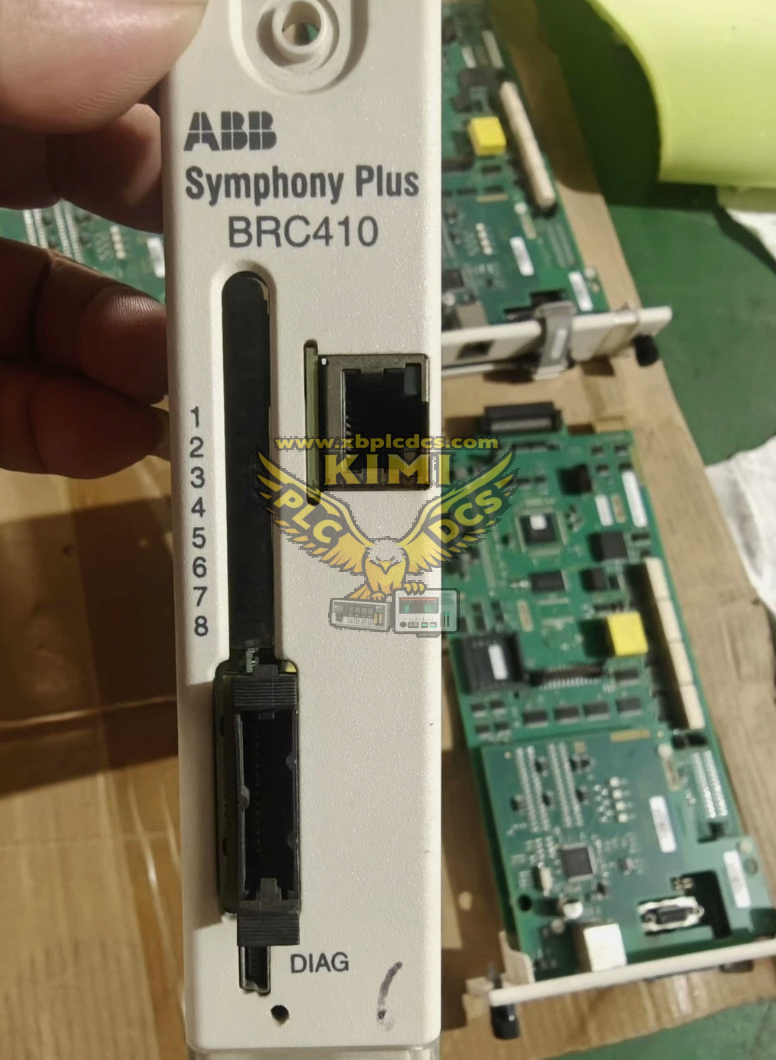
ABB BRC‑410 Bridge Controller (Symphony Plus HR Series DCS)
1. Product Description
The ABB BRC‑410 (also named SPBRC410) is a high-performance rack-mounted bridge controller core processor for ABB Symphony Plus HR Series distributed control system, upgraded successor of BRC400 and HPG800 modules. Built with a 32-bit industrial Coldfire processor, it adopts conformal coated PCB design to resist dust, humidity and chemical corrosion in power and heavy industrial environments. It delivers full backward compatibility with legacy Bailey INFI 90, Network 90 and Harmony DCS systems, enabling form-fit direct replacement without cabinet or wiring modification. Equipped with native 100Mbps RJ45 Modbus TCP Ethernet port, serial debug interface and high-speed backplane bus, it supports synchronous driving of HR, SD and S800 series I/O racks. The module features 2MB NVRAM extended configuration memory, supports up to 30,000 control function blocks, complies with IEC 61131-2 standards, and supports hot redundant dual-controller hot standby configuration to achieve bumpless switchover for critical process control loops.
2. Core Product Functions
- Full-Function Real-Time Process Control: Embeds over 150 pre-defined control algorithm blocks, supporting continuous PID closed-loop regulation, sequential logic control, safety interlock protection, mathematical calculation, batch processing and accumulation statistics. One single module can independently manage full rack analog/digital I/O modules to complete local field station closed-loop control without upper system intervention.
- Cross-System Bridge Gateway Integration: Acts as a protocol bridge to realize two-way data exchange between legacy INFI90/Harmony systems and modern Symphony Plus platform. Native Modbus TCP master/slave communication connects third-party PLCs, variable frequency drives, gas turbine controllers and intelligent analyzers; expandable to support PROFIBUS DP, DNP3 and HART protocols via matched communication accessory cards.
- Dual Redundant Hot Standby Operation: Supports paired dual BRC‑410 redundant configuration. If the active main controller fails, the standby unit executes bumpless automatic switchover within milliseconds, ensuring zero interruption of critical process control logic, widely deployed for SIL2/SIL3 safety-critical power generation control loops.
- Multi-Type I/O Subsystem Coordination: Simultaneously compatible with HR series, SD series and S800 I/O racks, high-speed backplane bus completes real-time collection of analog/digital field signals and output of control commands, with 1ms SOE sequence-of-event high-precision time stamping function for fault traceability.
- Online Non-Downtime Upgrade & Maintenance: Supports online firmware upgrade and online configuration modification without stopping production when running under redundant architecture. Local serial debug port realizes program download, real-time fault diagnosis and parameter calibration; front panel LED indicators display running, fault, communication and redundant working status visually.
- Multi-Layer Data Upload & Downlink Scheduling: Transmits real-time process data, alarm signals and historical trending information upward to operator stations, historians and ABB 800xA supervisory systems; distributes upper control setpoints downward to field I/O modules for stable automatic process regulation.
3. Typical Application Scenarios
- Thermal power plants: boiler main control, steam turbine governor, auxiliary system control for fans, pumps and water treatment
- Hydropower stations: turbine speed regulation, water level control, generator excitation and grid dispatching data interaction
- Combined-cycle power plants, coal-fired and nuclear auxiliary power unit DCS control cabinets
- Petrochemical, refinery and chemical industrial self-owned power station process automation systems
- Urban waterworks and sewage treatment plants: dosing, filtration, sludge treatment and flow pressure control
- Legacy Bailey INFI90/Network90 DCS system renovation, spare replacement and capacity expansion projects
4. Common Issues & Troubleshooting
Issue 1: Modbus TCP communication disconnection, unable to read third-party device data
Root Causes: Damaged Ethernet cable or loose RJ45 connector; inconsistent IP address segment between controller and slave devices; excessive communication polling load; internal Ethernet transceiver circuit failure on PCB. Solutions: Replace Ethernet cable and re-plug RJ45 port; unify IP address range of all connected devices; optimize Modbus polling cycle and reduce unnecessary data points; replace the module if internal communication circuit is damaged.
Issue 2: Redundant dual controllers trigger mismatch fault alarm, fail to complete hot switchover
Root Causes: Mismatched firmware versions between primary and standby BRC‑410 modules; inconsistent control logic configuration; poor contact of rack backplane gold-plated pins; redundant synchronization bus wiring loose. Solutions: Upgrade both controllers to identical unified firmware; synchronize full control configuration offline; power off the rack and clean backplane connector dust; retighten redundant synchronization cable terminals.
Issue 3: Process control output unstable, large fluctuation of PID regulation values
Root Causes: Excessive cabinet ambient temperature exceeding +60°C upper limit; dust accumulation on PCB causing signal interference; incomplete I/O backplane contact; unreasonable PID parameter setting. Solutions: Clean cabinet cooling filters and stabilize operating temperature between -20°C ~ +60°C; blow clean PCB surface dust; re-seat all I/O modules tightly; tune PID gain, integral and derivative parameters via Symphony Plus configuration software.
Issue 4: Module power fault indicator lights up, controller fails to enter running state after power-on
Root Causes: Abnormal rack 24VDC power supply voltage; loose backplane power contact pins; internal power circuit fuse blown on BRC‑410 board; severe PCB corrosion caused by humid environment. Solutions: Measure and stabilize rack DC power supply; clean backplane power terminals; replace the controller if internal power circuit fuse or power chip is burnt; install dehumidification equipment for control cabinet in high-humidity workshop.
Issue 5: Online configuration download failure, NVRAM storage read-write error reported
Root Causes: Insufficient remaining NVRAM storage space; abnormal communication between configuration software and controller; aging internal memory chip; frequent power fluctuation during configuration download. Solutions: Clean unused redundant function blocks to release storage space; check serial debug cable connection and communication baud rate; avoid power supply fluctuation during program download; replace module if internal memory chip is damaged.