

News
Featured
Contact Us
Contact: POWER DUKE
Phone: +86 18059884790
E-mail: plc66@qq.com
Add: fujian xiamen
- Warehouse: Spot
- Warranty: 365 days
- Quality: Original module
- Condition: New
- Shipping method: Courier delivery
- Contact person: LI MING
- Contact number: +86 18059884790
- WeChat:18059884790
- E-mail: plc66@qq.com
4022.437.1856 ASML MC1 AB37 Main Control PCB Module
1. Product Description
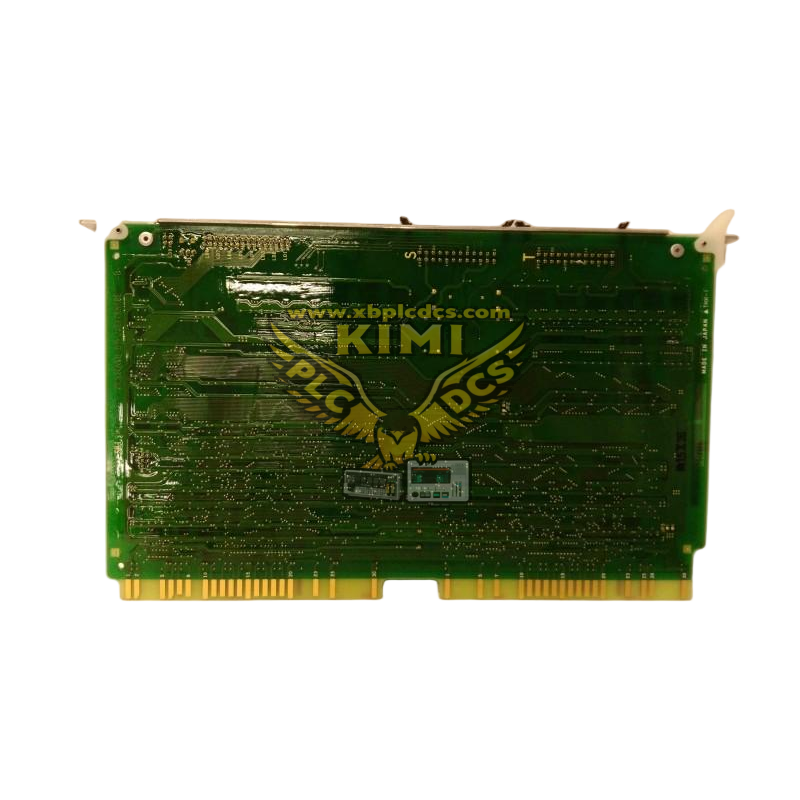
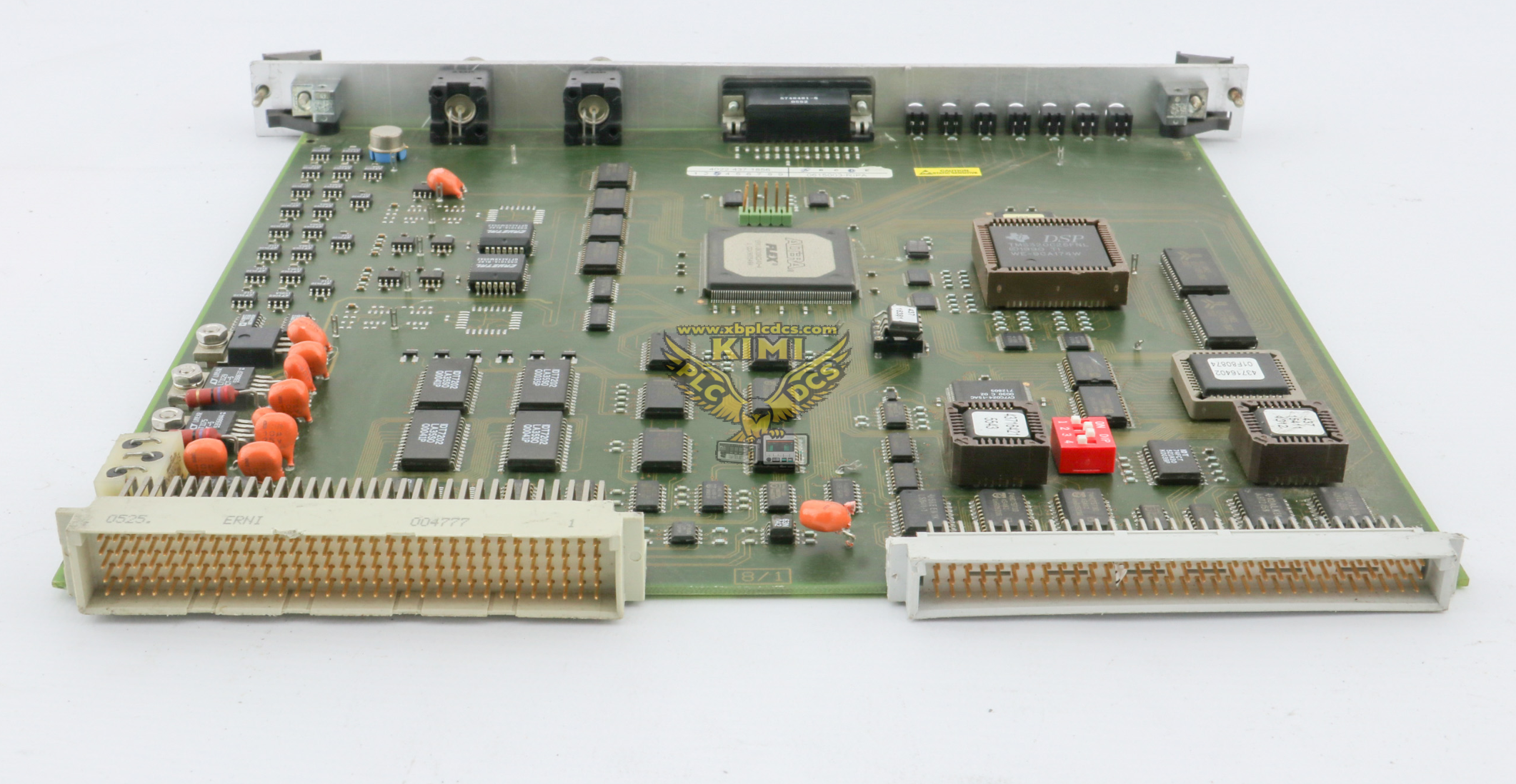
4022.437.1856 is ASML MC1 AB37 core main control board, dedicated to TWINSCAN series DUV/EUV lithography machines, used for wafer stage, reticle stage, light source and gas cabinet interlock logic control. It is a VME standard industrial plug-in board with multi-layer high precision PCB, built-in FPGA real-time logic chip, multi-channel differential signal acquisition and isolated communication circuits. The board is marked MC1 AB37 hardware revision, full part number 4022.437.1856, matched with ASML machine central rack backplane, supporting hot plug maintenance, dust-proof EMC shielding coating, suitable for high cleanroom semiconductor factory environment.
- Full Part Number: 4022.437.1856
- Hardware Mark: MC1 AB37
- Form Factor: VME64 single-width Eurocard plug-in board
- Core Chip: High-speed industrial FPGA for real-time motion interlock
- Signal Interface: Multi-channel differential encoder input, digital DI/DO, analog 4-20mA signal
- Communication: VME backplane bus, serial debug port, fiber optical link for stage synchronization
- Power Input: +5V, ±12V via rack backplane
- Application Machine: ASML TWINSCAN DUV NXT, XT series lithography tools
Working Environment: Cleanroom Class 1, 18–26℃, low vibration, low electromagnetic interference
2. Core Product Functions
- Dual-stage motion synchronous interlock control: Collect position feedback signals from wafer stage and reticle stage encoders, execute high-speed closed-loop synchronization algorithm to ensure nanometer-level overlay accuracy during exposure scanning.
- Full machine safety interlock processing: Aggregate all safety signals including door interlock, emergency stop, vacuum leakage, gas overpressure, stage overtravel; trigger machine ESD stop once dangerous state detected to protect expensive lens and wafer.
- Light source & gas cabinet signal conditioning: Receive analog pressure, flow, temperature signals from gas cabinet and excimer laser, filter and convert to digital data and upload to upper host controller.
- Real-time fault diagnosis & event logging: On-board self-test circuit monitors PCB power, FPGA status, all input/output channels; store SOE fault records for equipment maintenance troubleshooting.
- Optical fiber high-speed synchronization communication: Transmit real-time motion trigger signals to exposure sensor board via fiber, eliminate electrical delay and ground loop interference in cleanroom racks.
- Online firmware upgrade & parameter calibration: Support remote firmware download via machine host software, no need to power off the whole lithography rack during maintenance.
3. Application Scenarios
- ASML TWINSCAN NXT / XT DUV lithography systems (ArF, KrF light source)
- Semiconductor fab front-end wafer exposure production line core control rack
- Advanced logic chip, memory chip, display panel lithography equipment
- Cleanroom central control cabinet, matched with stage drive boards, gas analysis modules, laser control units
- Semiconductor equipment maintenance spare parts for factory spare stock & equipment refurbishment
4. Common Typical Issues & Root Causes
| Fault Phenomenon | Root Causes |
|---|---|
| Machine fails to enter exposure mode, constant safety interlock alarm | Damaged DI input channel, connector pin oxidation, internal signal optocoupler burnout |
| Stage position synchronization error, overlay offset out of spec | FPGA firmware corruption, differential signal circuit aging, loose backplane gold finger contact |
| Board power LED off, no communication with host controller | Backplane power supply undervoltage, internal power fuse blown, power filter capacitor failure |
| Random intermittent machine stop during high-volume production | PCB overheating from long-term continuous operation, cleanroom chemical vapor corrosion on circuit traces |
| Fail to upgrade firmware via host software | Serial debug port chip damage, incompatible firmware version, fiber communication link loss |
| Analog gas/temp signal drift, unstable readings | On-board signal conditioning resistor/capacitor aging, ground loop interference in rack |